Home / Use Cases
Use cases

Case studies from the field

Real problems, the systems we built to solve them, and the technology underneath.

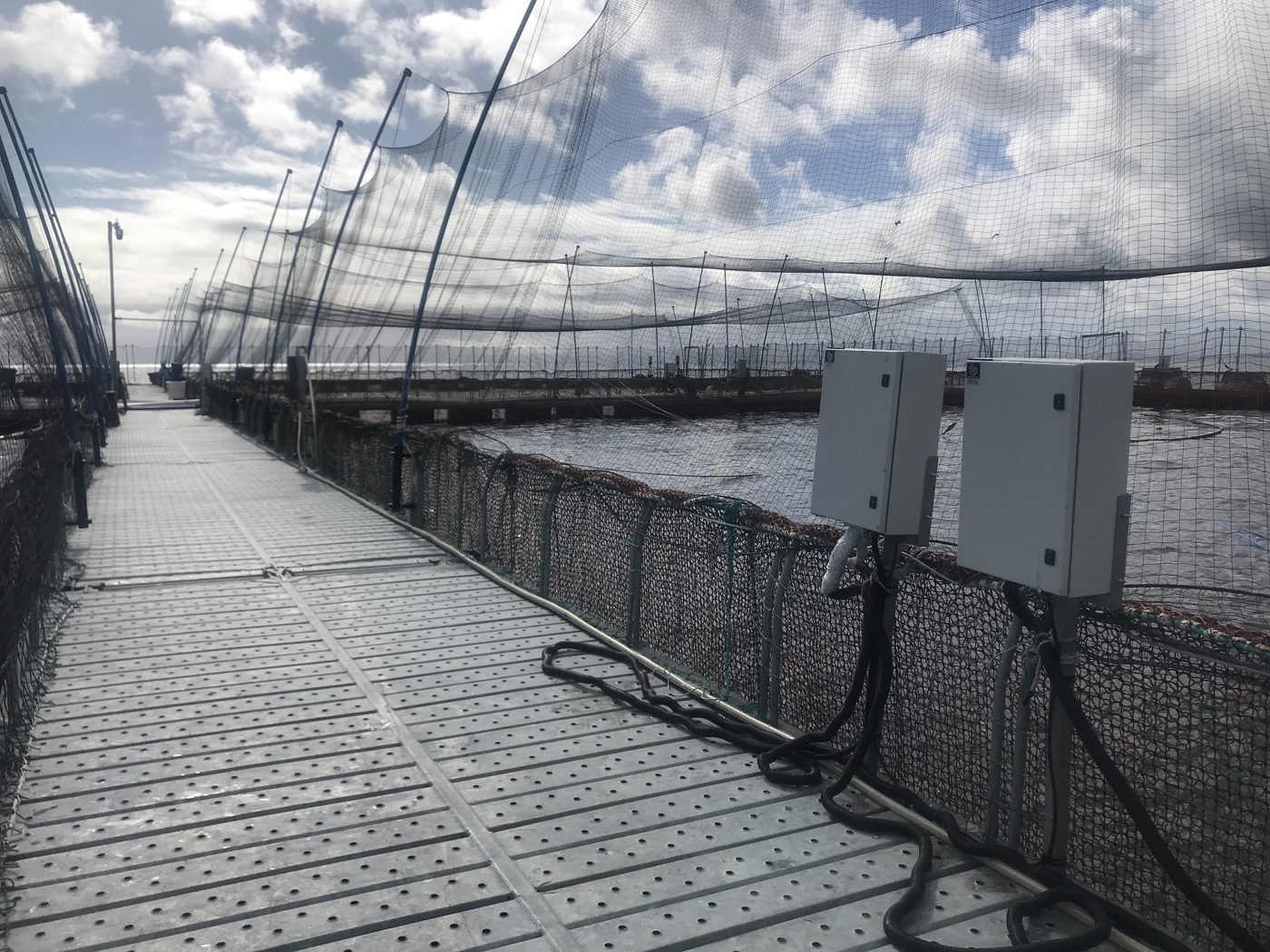
Aquanet monitoring enclosures installed on a fish-farm walkway beside the net pens
Aquaculture · Water

Aquanet: Smart Net Break Detection

An IoT monitoring system that detects breaks and damage in aquaculture nets and mesh structures, before they lead to fish escapes or financial loss.

Challenge

Damage to nets in fish-farming cages is hard to spot, and manual inspections are slow and periodic. Most of the net hangs underwater, below the floating ring, where a break can go unnoticed. An undetected break can let fish escape and cause significant operational and financial losses.
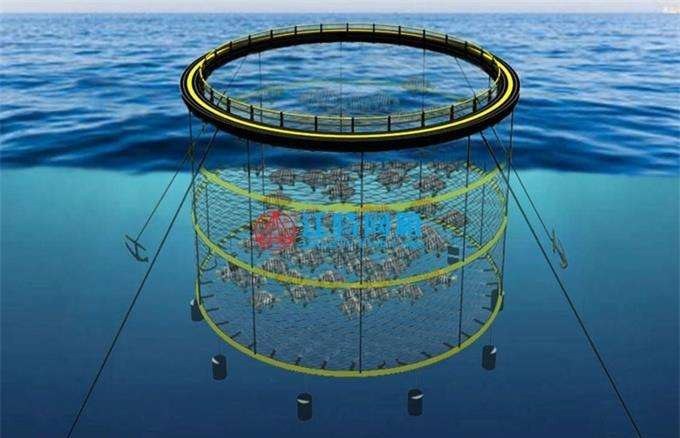
Illustration of an offshore fish-farm sea cage, with the net hanging below a floating ring
A typical sea cage: the net hangs out of sight below the ring.

How it works

Copper-wire sensing paths are built into the panel mesh rope of the net. Embedded electronics continuously check the electrical condition of these paths, and an interruption points to a broken wire or a damaged net section. The fault is processed by the firmware and reported to a remote monitoring dashboard, which shows the status of every panel so the crew can plan repairs.
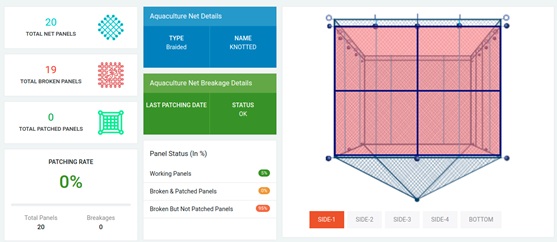
Aquanet dashboard showing a 3D view of the net cage, panel status and breakage details
The Aquanet dashboard: panel-wise status, breakage and patching details, and a 3D view of each net face.

Key features

  • Break detection built into the mesh rope itself
  • Continuous monitoring during normal farm operations
  • Wireless reporting of system status and faults
  • Firmware-based fault monitoring to identify abnormal conditions
  • Over-the-air firmware updates, with no routine physical access needed
  • Flexible communication options and a scalable design for different net configurations

Benefits

  • Reduced risk of losses: early warning of net damage helps stop fish escaping through broken sections.
  • Efficient maintenance: remote fault reports reduce manual inspections and help teams prioritise repairs.
  • Better visibility: continuous data on the condition of every monitored net section.

Applications

  • Fish-farming cages and net enclosures
  • Aquaculture mesh structures
  • Underwater net integrity
  • Protected aquatic enclosures
  • Other mesh structures needing break detection

Technology

  • Copper-wire break sensing
  • Panel mesh rope
  • Embedded firmware
  • Wireless communication
  • OTA updates
  • Remote monitoring dashboard
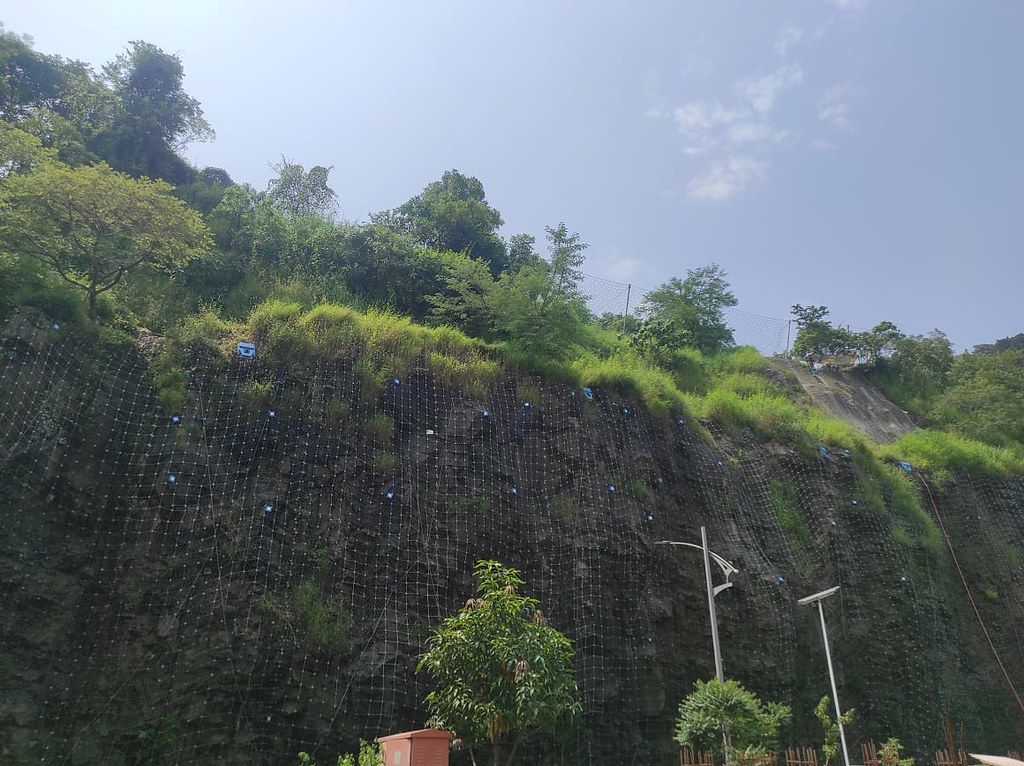
Rock slope fitted with protective netting and rockfall sensors
Critical Infrastructure · Railways

Rockfall Detection

Early warning of falling rocks along hill cuttings and ghat sections.

Problem

Rockfall on tracks and roads in hilly sections is sudden and dangerous. Manual patrols cannot watch every stretch at all hours, especially at night and during monsoon.

What we built

Vibration and tilt sensors along vulnerable slopes, with camera-based detection at the edge, that pick up rock movement and obstructions. Alerts reach the control room within seconds, with the location and images.

Technologies used

  • Vibration & tilt sensing
  • Edge vision AI
  • Solar power
  • Cellular backhaul
  • Real-time alerting
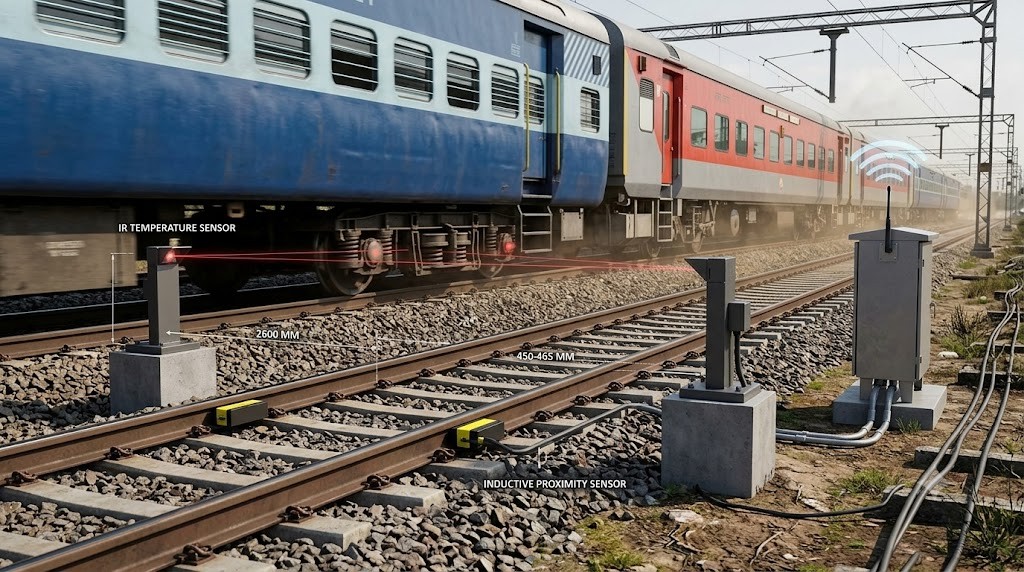
HABD layout beside the track: IR temperature sensors on posts on both sides of the rails 2600 mm apart, inductive proximity sensors on the rails, and a trackside cabinet with a wireless link, as a passenger train passes
Spot overheating in moving equipment

HABD: Hot Axle Box Detection

A trackside AI thermal and vibration system for passing trains.

Problem

Overheating axle boxes are a leading cause of bearing-related derailments. Visual inspection of passing trains misses early-stage failures, especially at night or at speed.

What we built

Infrared and vibration sensors that measure every axle of every passing train. AI separates genuine bearing faults from false readings such as brake heat, and alerts give the train, coach and axle position before the next station.

Technologies used

  • IR thermal sensing
  • Vibration analysis
  • Edge AI
  • Station & loco pilot alerts
  • Web portal & mobile app
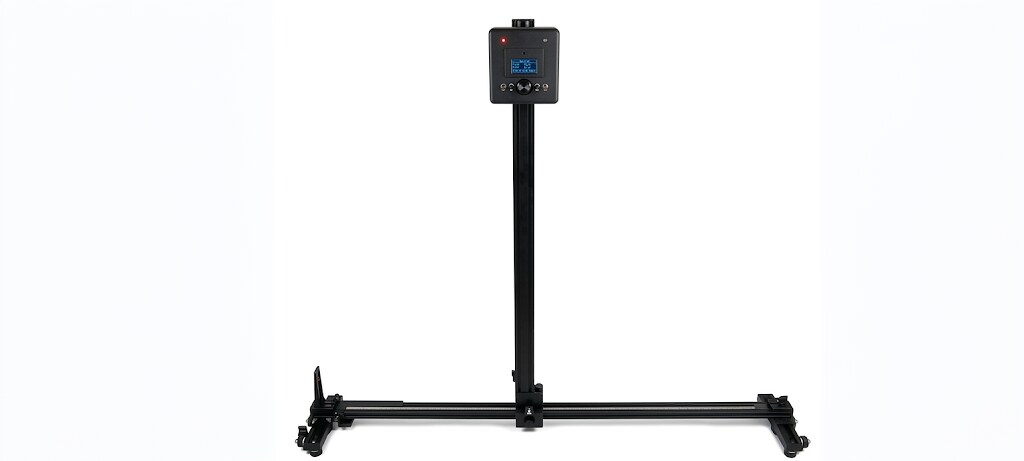
LLMG gauge assembly
Detect faults before downtime

LLMG: Live Line Monitoring Gauge

Real-time monitoring of overhead equipment (OHE) and traction power lines.

Problem

OHE faults are usually discovered only after a train stops or a section trips, delaying many trains. Periodic manual inspection is too infrequent to catch slow degradation.

What we built

LLMG units that monitor voltage, current, sag and contact-wire condition around the clock. ML models filter noise, detect abnormal trends that fixed thresholds miss, and alert the control room and maintenance teams.

Technologies used

  • High-voltage sensing
  • Signal processing
  • Anomaly detection
  • Device self-diagnostics
  • Dashboard & mobile alerts

Have a similar challenge?

We can show you how these systems could fit your assets.